
Why MLS dashboards beat out email, paid social, events and trade publications (and the data to back it up).
You’re bleeding $60,000 a year trying to reach real estate agents who never see your ads. Your Facebook campaigns are hitting agents while they’re watching cat videos. Your trade publication ads are buried on page 47. And that $25,000 conference booth? The agents who stopped by were just there for the free swag.
If that feels familiar, you’re not alone. Marketers have been fighting this uphill battle for years — spending heavily across channels that look good in reports but quietly drain budgets in practice.
The ROAS Challenge
For advertisers selling products and services to real estate agents, Return on Ad Spend (ROAS) is all about engagement, click-throughs, conversions, and sales — simply put, it’s about reaching the right agents, at the right time, with the right offer. Too often, companies rely on traditional channels like social media or consumer-facing email buys to target agents.
As many of these companies have learned, traditional channels don’t always provide reach to active agents, and when they do, there’s no guarantee when agents are seeing their ads. To maximize ROAS, companies must reach only real estate agents who are actively doing business, when they’re thinking about doing business. Ads that reach non-agents, career hobbyists, inactive agents, or active agents who are thinking about their friends or grandkids or their next vacation spot equate to wasted ad spend.
If your channel mix can’t guarantee reach to active agents when they’re thinking about business, you’re not maximizing your ROAS. This is the silent killer of marketing efficiency — thousands in spend wasted on the wrong moment, the wrong mindset, or the wrong audience.
This article examines the major channels used to reach agents — email, social media, trade publication ads, in-person events, and MLS dashboard advertising — to understand which delivers the strongest ROAS and why.
ROAS Benchmarks by Channel
1) Email Campaigns
Why it matters:
Email is one of the first channels most marketers think of when trying to reach agents. It’s direct, trackable, and easy to execute. But the reality is: performance depends heavily on trust. If you’re an association emailing your own members, your numbers will look great. If you’re a third-party vendor, it’s a much tougher climb — and it’s important to know the difference before planning your ad mix and spend.
What the numbers say:
Takeaway:
That 2% CTR means 98% of your budget vanishes into spam folders and unopened inboxes — email a great channel for reminders, but generally not a great one for discovery. When planning email campaigns to reach agents, assume a ~2% CTR baseline unless you’re partnering directly with associations. Anything higher is the exception, not the norm.
2) Paid Social (Facebook/Instagram)
Why it matters:
Social media feels like a no-brainer: it’s where everyone spends time, and the targeting options are strong. But the challenge is context. When agents are scrolling through vacation photos or catching up with friends, your ad is competing with entertainment — not other business tools. That context mismatch is why B2B campaigns often underperform here.
What the numbers say:
Takeaway:
Social can create awareness, but B2B conversion efficiency lags other channels—use it surgically for reach/retargeting, not as your ROAS workhorse, particularly since you’re essentially paying to interrupt agents’ personal time, competing with their kids’ photos and vacation reels. It doesn’t take a genius to understand that with B2B conversion averaging around 0.9%, paid social is great for brand presence — but can prove to be a slow death for ROAS.
3) Display Ads in Trade Publications
Why it matters:
Advertising in industry publications feels right — it’s where agents go for industry news and trends, and it carries credibility. But while audience reach looks good in a media kit, the click-through performance tells a different story.
What the numbers say:
Takeaway:
At typical CPMs, placing trade display ads, especially without highly matched editorial context, can mean you’re lighting money on fire — paying for prestige, not performance. Expect low CTRs for display; success often comes from frequency and lead capture tactics like gated content..
4) In-Person Events (Exhibits & Sponsorships)
Why it matters:
Events provide face-to-face time with prospects and are a good place to close hot, already-nurtured leads, particularly for high price point sales. But, events eat up a lot of budget and your audience is limited to who, exactly, is in attendance. If you’re using an event to prospect new leads, there’s no way to guarantee the majority of people you’ll meet there fit your ICPs. And for those that do, you need to follow-up aggressively post-event, or those event interactions are quickly forgotten. It’s not surprising, then, that the cost-per-lead for Events is one of the highest in B2B. That makes it critical to weigh the return carefully.
What the numbers say:
Takeaway:
$2,188 to close one lead? Plus travel, booth costs, and three days of your team’s time? This is how marketing budgets die — not with a bang, but with branded lanyards
So what’s left? Keep throwing good money after bad? Accept that reaching agents efficiently is impossible? Or is there a channel that actually works?
Events can deliver high-quality leads but with expensive, resource-heavy costs and significant execution variance; ROAS depends heavily on follow-up.
5) MLS Dashboard Advertising (RE-Target Agent Direct)
Why it matters:
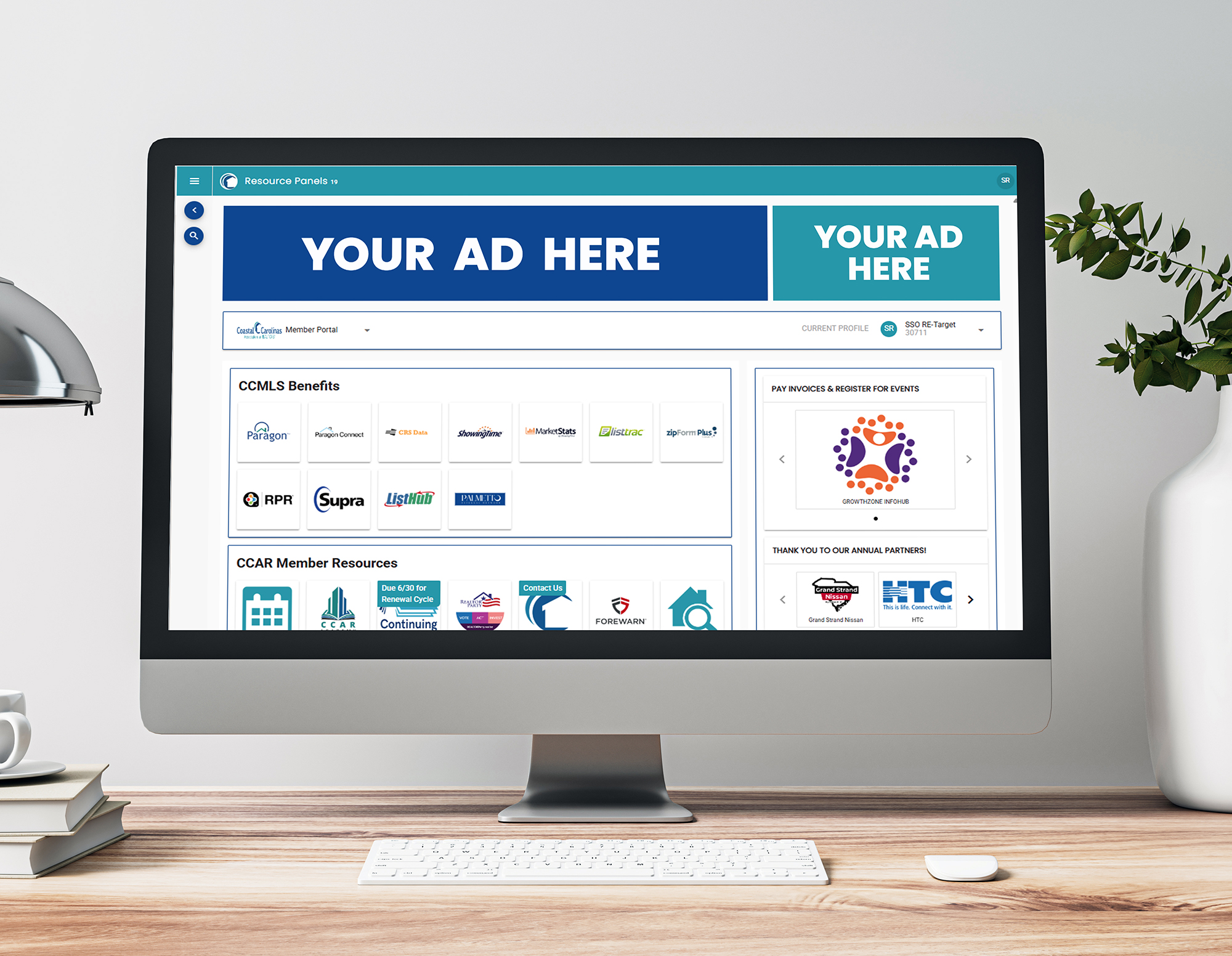
This is the only channel that integrates advertising directly into the daily workflows agents can’t skip. Unlike email or social media, MLS Dashboard advertising reaches agents in the right place (inside their MLS software, the application they depend on and use more than any other to get work done) and at the right time (when they’re deep in work-mode, and are most likely to source products and services).
It is at the intersection of place and time that an agent’s intent to procure needed products and services is usually highest. And that is why programs like RE-Target Agent Direct were developed: to provide businesses a way to reach agents at this critical juncture.
What the numbers say:
Takeaway:
There’s only one place where 100% of your impressions hit active, licensed agents while they’re actually working — inside their MLS dashboard. It’s not just better targeting. It’s the channel everyone’s been missing.
MLS dashboard advertising is uniquely positioned to deliver superior ROAS. Through programs like RE-Target Agent Direct, work-mode intent is aligned with active-agent reach, reducing wasted impressions on inactive “hobby” agents.
| Channel | Typical CTR / Conversion | Cost Notes | ROAS Implications |
| Email (vendor → agents) | ~2% CTR | Association emails can be higher, but vendor emails trend lower. | Decent ROAS if lists are segmented; less so if broad. |
| Paid Social | ~1.5–2.5% CTR; ~0.9% conversion | CPMs fluctuate; context is weak for B2B. | Great for awareness, not ROAS. |
| Trade Display Ads | ~0.27–0.46% CTR | CPM model; prestige-driven. | Awareness channel, not conversion-driven. |
| Events | ~$112 CPL; ~$2,188 cost-to-close | Big spend, big ops cost. | Leads depend on quality of follow-up; expensive to scale. |
| MLS Dashboard (RE-Target) | ~2.0 to ~4.0% CTR | Impressions are 100% in-workflow. | Strong ROAS: intent + exclusivity. |
How to Diversify Your Ad Budget for Best ROAS
Great for broad reach, weaker for conversion.
Sample Allocation (for a $100K campaign):
Conclusion
Every day you delay shifting budget to MLS dashboard advertising, you’re choosing to waste money on channels that don’t work. The marketers already making the switch? They’re capturing the agents you’re missing.
ROAS is about more than impressions — it’s about reaching the right people in the right place. When the audience is real estate agents, channels perform very differently than when the target is consumers.
While email, social, display, and events all have a role, the data is clear: MLS dashboard advertising – through services like RE-Target® Agent Direct – provides the most direct, efficient, and contextually relevant way to maximize ROAS.
So stop buying impressions. Start buying impact. For marketers ready to rethink their mix, this is where every dollar works harder.